3D, 4D, and HD Ultrasound: What Is the Real Difference?
When you start researching elective ultrasound options, the terminology can feel a little overwhelming at first. 3D, 4D, HD live, 2D — every studio seems to list a slightly different combination, and it is not always obvious what each one actually means for the experience you will have and the images you will take home. Understanding the genuine differences between these imaging types helps you choose the session that fits what you are hoping for, whether that is watching your baby move in real time, seeing fine facial details on a clear HD image, or simply having a beautiful still portrait to frame and keep. This guide breaks down each imaging type honestly, compares them side by side, and helps you figure out which one belongs in your pregnancy story.
- Starting With 2D: The Foundation of All Ultrasound
- What Is 3D Ultrasound?
- What Is 4D Ultrasound?
- What Is HD Live Ultrasound?
- Side-by-Side Comparison of All Four Types
- Which Type Is Right for Your Pregnancy Stage?
- Why Imaging Type and Timing Work Together
- What You Take Home From Each Type of Session
- A Note on Elective Ultrasound and Prenatal Care
- Frequently Asked Questions
- Ready to Choose Your Session?
- 2D ultrasound produces flat, black and white images and is the basis for gender determination and heartbeat sessions.
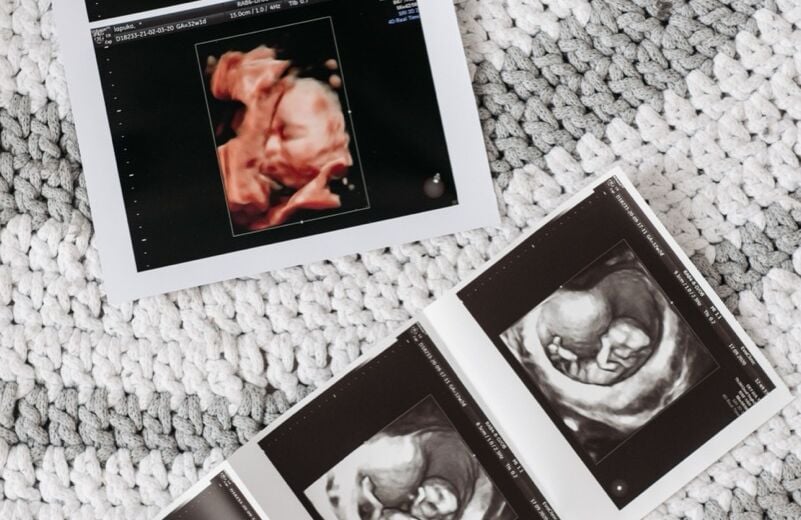
- 3D ultrasound creates still, three-dimensional images of baby's features at a single moment in time.
- 4D ultrasound adds real-time motion to 3D imaging, so you watch baby move live on screen.
- HD live ultrasound layers enhanced skin-tone rendering and light simulation over 4D for the most lifelike, detailed views available.
- For most families seeking the best keepsake images, 4D and HD sessions during the 26 to 32 week window produce the most stunning results.
Starting With 2D: The Foundation of All Ultrasound
Before understanding what makes 3D, 4D, and HD imaging different, it helps to start with 2D ultrasound, which is the foundation everything else builds upon. When you visit your OB for a routine prenatal scan, what you see on the screen is 2D imaging. It produces flat, grey-scale images that show a cross-sectional slice of whatever the sound waves are passing through at a given moment. The anatomy is visible in two dimensions: length and width, with no depth information rendered on screen.
2D imaging is clinically essential. It is what your OB uses to measure fetal growth, check anatomy, locate the placenta, assess fluid levels, and confirm development at each stage of pregnancy. It is reliable, well-established, and the reason clinical prenatal care works as effectively as it does.
In an elective studio setting, 2D ultrasound is also the format used for gender determination sessions and heartbeat captures. The images it produces are clear and meaningful, and many families treasure their black and white 2D prints as much as anything else from their pregnancy. What 2D does not do is show depth, texture, or real-time three-dimensional movement, which is where the other imaging types come in.
What Is 3D Ultrasound?
3D ultrasound takes the same basic sound wave technology as 2D imaging and uses it from multiple angles simultaneously, then reconstructs those signals into a single three-dimensional still image. The result is a rendering of your baby's surface features, showing actual depth, contour, and shape rather than a flat cross-section.
Think of the difference between a flat blueprint of a face and a sculpture of that same face. The blueprint shows the same information in two dimensions. The sculpture shows you the cheekbones, the curve of the nose, the softness of the lips. 3D ultrasound is the sculpture version of what your baby looks like inside the womb at a specific moment.
3D images are still images, not video. Each render captures baby at one point in time. The images can be extraordinarily beautiful, particularly when baby is positioned well with good fluid in front of the face. For families who want a portrait-quality image of their baby's features to frame, print, and share, 3D ultrasound delivers exactly that. The limitation is that because it is a still image, you do not get the experience of watching your baby move, yawn, or stretch in real time.

What Is 4D Ultrasound?
4D ultrasound is 3D ultrasound in motion. The fourth dimension is time. Rather than rendering a single still image, 4D imaging continuously reconstructs the three-dimensional view in real time, so you see your baby moving live on the screen in depth and detail. Every stretch, yawn, hand movement, and facial expression appears as it happens, not as a frozen capture.
This is what most families picture when they imagine a keepsake ultrasound session. You are watching your baby, not looking at a photograph of your baby. The room tends to get very quiet during a 4D session, and then very loud when something unexpected happens, like a sudden yawn or a tiny hand reaching up toward the face. Those are the moments families describe for years afterward.
The live nature of 4D imaging also means the experience extends beyond the images themselves. Even if you only end up with a handful of stunning still captures from the session, the memory of watching your baby in real time surrounded by the people you love is something no photograph can fully contain. That shared experience is one of the defining reasons elective 4D ultrasound has become such a meaningful pregnancy tradition for so many families.
The difference between 3D and 4D ultrasound is the difference between a photograph and a home video. Both are treasures. Only one of them moves.
What Is HD Live Ultrasound?
HD live ultrasound is the most advanced imaging format available in elective studio settings, and it builds directly on 4D technology by adding a sophisticated layer of light simulation and skin-tone rendering on top of the real-time three-dimensional view.
Standard 4D imaging renders baby's surface features in a warm, amber-toned color palette that gives you clear depth and shape information. HD live imaging takes that rendering and adds a simulated light source that illuminates baby's features with significantly greater contrast, shadow, and texture. The result looks noticeably more lifelike than standard 4D. Skin folds, eyelashes, lip definition, and the subtle curves of cheeks and brows appear with a level of detail and realism that can genuinely take your breath away the first time you see it on a large screen.
HD live is still real-time motion imaging like 4D, so you get all the same expressive, live moments. The difference is purely in the visual richness of the rendering. HD live requires more from the imaging conditions to perform at its best, which is why it tends to shine most brightly during the 26 to 32 week window when amniotic fluid levels are strong and baby's facial fat development is well underway. With the right positioning and good fluid, HD live images from this stage can rival the detail and emotional impact of a newborn photograph.
Side-by-Side Comparison of All Four Types
| Feature | 2D | 3D | 4D | HD Live |
|---|---|---|---|---|
| Shows depth and shape | — | ✓ | ✓ | ✓ |
| Real-time live motion | — | — | ✓ | ✓ |
| Enhanced skin-tone rendering | — | — | — | ✓ |
| Simulated light and shadow | — | — | — | ✓ |
| Gender determination | ✓ | — | ✓ | ✓ |
| Ideal from 15+ weeks | ✓ | — | — | — |
| Best at 26 to 32 weeks | — | ✓ | ✓ | ✓ |
| Keepsake still images | ✓ | ✓ | ✓ | ✓ |
| Session video keepsake | — | — | ✓ | ✓ |
Which Type Is Right for Your Pregnancy Stage and Goals?
Now that the differences are clear, the practical question is which one fits where you are in your pregnancy and what you are hoping to experience. Here is how to think through it.
If You Are in the First or Early Second Trimester
A 2D session is your friend at this stage. Gender determination is available from 15 weeks, and heartbeat keepsakes are available from 10 weeks. The imaging conditions for 3D, 4D, and HD are not yet at their best this early, so a 2D visit is genuinely the right choice rather than a compromise. It is its own meaningful milestone. Many families plan a 2D gender visit early and then return for a 4D or HD session later in the sweet spot window.
If You Want the Classic Keepsake Experience
A 4D session during the 26 to 32 week window is the choice most families make when they imagine their ideal keepsake visit. You watch baby in real time, catch movements and expressions as they happen, and leave with a session video alongside your still images. It is the most popular format for a reason: the live experience is simply extraordinary in a way that no still image can fully replicate.
If You Want the Most Detailed, Lifelike Images Available
HD live is what you are looking for. If you have been imagining images that look almost photographic in their detail and warmth, or if you plan to print large-format artwork for the nursery, HD imaging during the 26 to 32 week window can deliver that level of quality when conditions are right. The combination of 4D motion experience plus HD image captures during that session is what many families describe as their most treasured pregnancy experience.
If You Want a Portrait-Style Still Image
3D imaging produces the most rendering-focused still images, and they can be spectacularly detailed when baby is positioned well. Some families specifically love 3D for wall prints because the still, deeply rendered quality of the image has an almost sculptural, artistic quality to it. 3D and 4D are often available within the same session, so you do not always have to choose between the two.
If your schedule and your pregnancy stage allow for it, book a 4D or HD session between 26 and 32 weeks. That single visit will give you the live experience, the still image captures, and the session video, all in one. If you want a first-trimester milestone as well, add a 2D gender visit at 15 to 18 weeks and treat them as two separate chapters of your pregnancy story.
You can explore all available packages and session types on the ultrasound packages page at Behind the Bump HD to find the combination that fits your stage and your goals.
Why Imaging Type and Timing Work Together
Choosing the right imaging type is only half of the equation. The timing of your visit interacts directly with which type you book, and getting both right together is what tends to produce the sessions families remember forever.
3D and 4D imaging at 20 weeks looks different from the same imaging at 29 weeks, even though the technology is identical. At 20 weeks, baby's facial fat layer is still developing, which means features appear more angular and bony in 3D and 4D renders than most families expect from the images they have seen online. By 28 or 29 weeks, that fat layer has filled in significantly, the cheeks are round, the lips are full, and the rendering comes alive in a completely different way.
HD live amplifies this relationship even further. Because HD imaging is so sensitive to surface detail, the difference between imaging at 24 weeks and 30 weeks in HD is quite dramatic. At 30 weeks, the skin textures, the fold of a tiny ear, the shadow beneath a prominent lip — all of it renders with a richness that simply is not there yet at 24 weeks.
This is why timing recommendations and imaging type recommendations are always connected. For the complete picture on timing across every stage of pregnancy, the 4D ultrasound Knoxville guide at Behind the Bump HD walks through the best weeks in detail so you can plan your visit around both the right format and the right window.
What You Take Home From Each Type of Session
The keepsakes you leave with vary depending on the session type you choose and the specific package you book. Here is a general picture of what each format produces.
- 2D sessions produce printed black and white images and digital image delivery. Depending on the package, gender confirmation is included. Some packages also include heartbeat listening and recording options.
- 3D and 4D sessions produce a mix of still image captures in both 3D rendered format and potentially 2D alongside them, plus a real-time video of your session that you can watch and share. Digital delivery is standard and printed images are available depending on your package.
- HD live sessions produce still image captures with the richer, more lifelike HD rendering quality plus your session video. The still images from HD sessions are often the ones families choose to print in larger formats for the nursery or as gifts for grandparents.
Across all session types, heartbeat animal keepsakes are available as an add-on from 10 weeks. If you want to combine your imaging session with a plush heartbeat keepsake to take home, just mention it when you book and our team at Behind the Bump HD will incorporate it into your visit. Learn more about the heartbeat animal keepsake experience and what it adds to your appointment.
A Note on Elective Ultrasound and Your Prenatal Care
All ultrasound imaging — clinical and elective — uses the same underlying sound wave technology. The American Institute of Ultrasound in Medicine (AIUM) has established professional guidelines around the responsible use of diagnostic ultrasound, and elective studios like Behind the Bump HD follow session protocols designed to prioritize your comfort and wellbeing throughout every visit.
Frequently Asked Questions About 3D vs 4D vs HD Ultrasound
What is the most important difference between 3D and 4D ultrasound?
The most important difference is motion. A 3D ultrasound produces a single still, three-dimensional image of your baby at one moment in time. A 4D ultrasound renders that same three-dimensional view continuously in real time, so you see your baby moving live on screen. For the keepsake experience of watching baby yawn, stretch, or make an expression, 4D is what you want.
Is HD ultrasound actually better than 4D, or just different?
HD live ultrasound is 4D ultrasound with an enhanced visual rendering layer added on top. You still get real-time motion, but the images have significantly more detail, skin-tone richness, and simulated lighting that makes them look more lifelike. Whether it is "better" depends on what you value — HD live produces more visually stunning individual image captures, while standard 4D still delivers the full live motion experience. Many packages include both.
Can I get 3D and 4D images in the same session?
Yes, in most cases. 3D still captures and 4D real-time video are often produced within the same imaging session since the technology is closely related. When our team pauses the live view to capture a particularly beautiful moment, that still capture is effectively a 3D rendered image. Ask about what is included in your specific package when you book.
Which imaging type is best for seeing baby's face clearly?
For the most detailed, lifelike facial views, HD live ultrasound during the 26 to 32 week window tends to produce the clearest results. Standard 4D during the same window is also excellent. The key factor in facial clarity is actually timing and fluid levels rather than imaging type alone — the best technology in the world benefits enormously from good amniotic fluid surrounding baby's face.
Is 2D ultrasound at an elective studio the same as what my OB does?
The imaging technology is the same — both use sound waves to create grey-scale 2D images. The difference is the purpose and the environment. Your OB's 2D scans are clinical and diagnostic, focused on measurements, anatomy, and health data. A 2D session at an elective studio is focused on connection, keepsakes, gender determination, and the bonding experience, in a relaxed, unhurried setting where you have time to simply be present with your baby.
What affects the quality of 3D, 4D, and HD images the most?
Three factors matter most: the gestational age and fat development of the baby, the amniotic fluid levels at the time of your session, and the position of baby relative to the transducer. Hydrating well in the days before your visit, booking during the 26 to 32 week window, and having a light snack before your appointment are the most effective steps you can take to improve imaging conditions.
At what week do 4D and HD ultrasound images look the best?
Most imaging specialists point to 27 to 30 weeks as the sweet spot within the broader 26 to 32 week window. At this stage, baby has developed enough subcutaneous fat for defined, rounded facial features, fluid levels are typically excellent, and baby is active enough to provide expressive moments without being so large that positioning becomes limiting.
Do all elective ultrasound studios offer HD live imaging?
Not all studios offer HD live imaging, as it requires specific equipment that supports the enhanced rendering technology. Behind the Bump HD offers HD live imaging as part of its keepsake session packages for families who want the most detailed, lifelike views available. Check the available packages to see which sessions include HD imaging.
Can I see my baby's eye color or hair in a 4D or HD ultrasound?
Eye color and hair color are determined by pigmentation that ultrasound sound waves do not detect. You will not see eye color in any ultrasound image. Hair, however, can sometimes be visible in 4D and HD sessions, particularly in later pregnancy when longer hair may be visible floating in the amniotic fluid around baby's head. It is one of the delightful surprises some sessions produce.
Do I need to choose between 4D and HD, or can I get both?
In most session formats, you experience both within the same visit. During your real-time 4D or HD live session, still image captures are taken at the best moments. The session video is recorded throughout. Depending on the package you choose, both the live motion experience and the high-quality still image keepsakes are part of what you take home. Review the available packages to find the one that includes the combination you want.
Ready to Choose Your Session?
Whether you are drawn to the live motion of 4D, the stunning detail of HD, or an early 2D gender visit to kick off your pregnancy milestones, Behind the Bump HD in Knoxville has the session for exactly where you are right now. Browse the packages or give us a call and our team will help you find the perfect fit.
Book Your Session Online View All Packages