
Bringing Siblings to Your Ultrasound: Everything You Need to Know
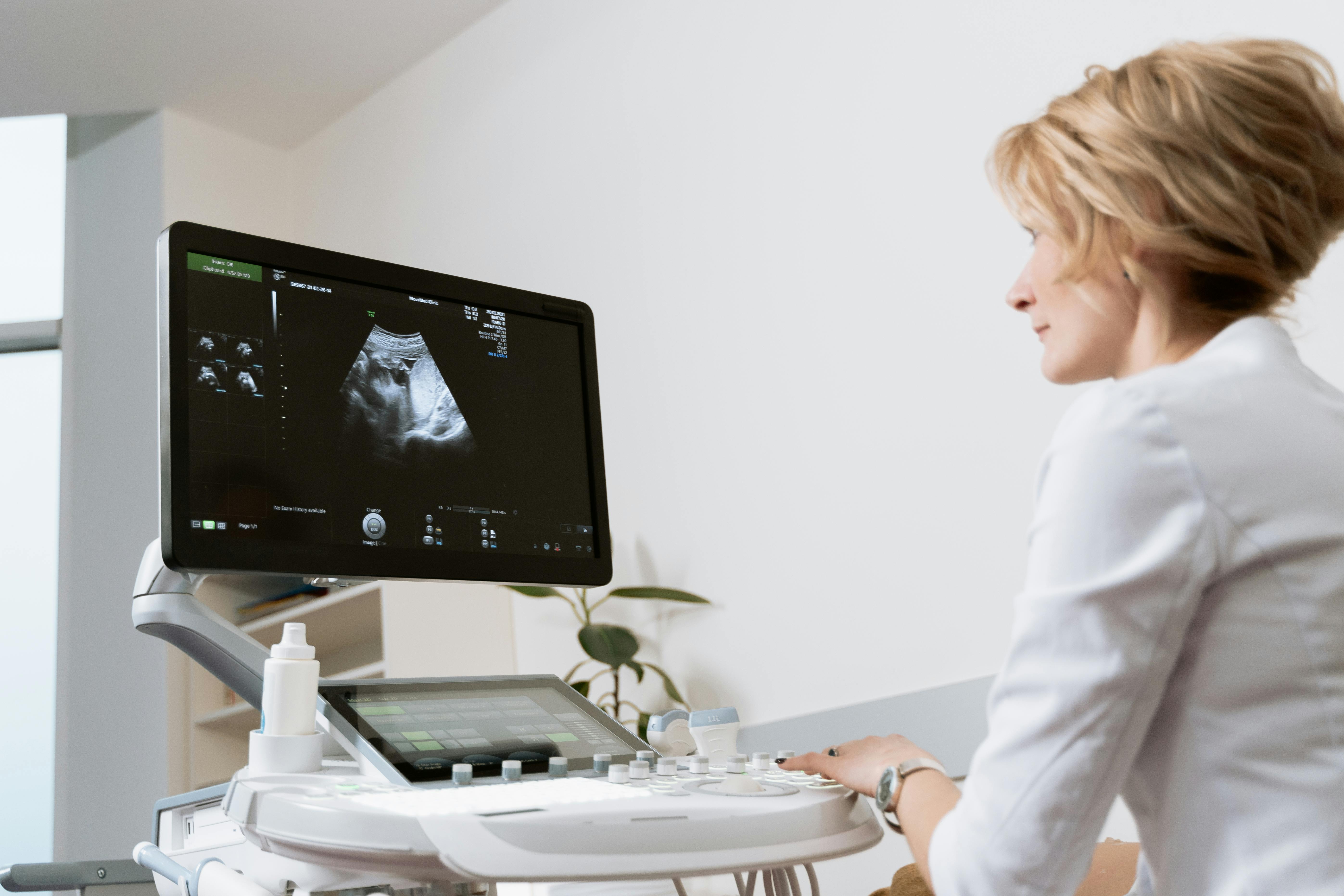
Bringing your child to a keepsake ultrasound is one of those unexpected pregnancy moments tha t families talk about for years — and almost always wish they had done sooner.
Quick Takeaways
- Behind the Bump HD in Powell, TN warmly welcomes siblings of all ages at every session.
- Children as young as toddlers can have a meaningful reaction to seeing baby on screen — often more than parent s expect.
- A little preparation goes a long way: show simple videos, use a stuffed animal to practice, and keep language concrete.
- Bringing a quiet activity or snack for younger children helps sessions run smoothly.
- The studio has large viewing screens so kids can see clearly without crowding the exam area.
- Many families say the sibling's reaction is their favorite moment from the entire visit.
You are booking your keepsake ultrasound session and the question comes up: should you bring your older child? Mayb e you have a two-year-old who has been patting your belly and asking where baby is. Maybe you have a six-year-old who is equal parts excited and skeptical about this new sibling situation. Maybe you have a ten-year-old who would feel left o ut if they did not get to be there.
Bringing siblings to your ultrasound is one of the most unexpectedly moving things a family can do during pregnancy . It is also something that benefits from a little thought and preparation — not because it is complicated, but because the right setup makes the whole experience better for everyone in the room. This guide walks you through everything you need to know.
1 Should You Bring Your Child to the Ultrasound?
The short answer is yes — if you want to. Behind the Bump HD in Powell, TN is a family-friendly studio built for ex actly this kind of shared experience. The space has comfortable seating and large viewing screens so every person in the room has a clear view of baby, which means your child does not need to be right next to the ultrasound equipment to fee l included.
Bringing your child to your keepsake ultrasound can do something that is genuinely hard to accomplish in any other way: it makes the baby real for them. Pregnancy is an abstract concept for young children. They can hear "there's a baby in mommy's tummy," they can feel kicks, they can see a growing belly — but seeing an actual face, actual movement, actu al fingers on a screen? That is a different level of understanding. And for many children, it is the moment the new sibl ing stops being a concept and starts being a person they are looking forward to meeting.
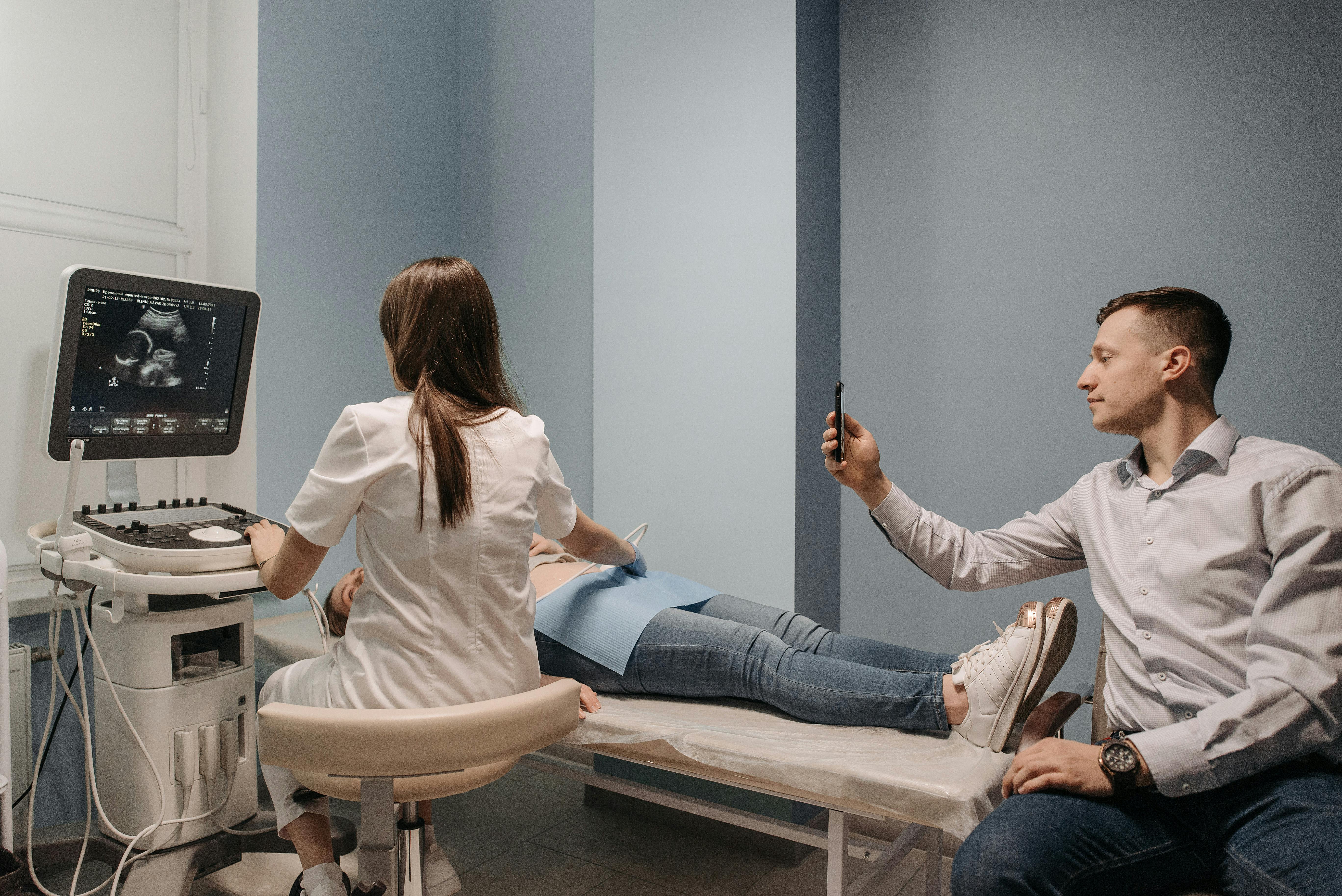
Families who visit our studio and bring older children consistently tell us that the sibling's reaction is the hi ghlight of the entire session. A five-year-old who gasps when baby moves. A seven-year-old who quietly says "that's real ly our baby." A toddler who waves at the screen. These are the kinds of moments that end up in family stories for decade s.
That said, you know your child best. If they are going through a particularly challenging phase, if they have sen sory sensitivities to new environments, or if you simply feel the session will be more relaxed without them, that is com pletely valid. This guide is for families who want to bring their kids along and want to do it well.
2 What to Expect by Age Group
Children at different stages of development respond to a keepsake ultrasound in very different ways. Here is a real istic look at what each age group tends to bring to the experience:
Toddlers: Pure Curiosity
Toddlers may not fully understand what they are seeing, but their natural curiosity and openness to new experienc es means they often have surprisingly sweet reactions. Many toddlers will point at the screen, wave, or try to talk to t he baby. They may also lose interest after a few minutes and become more focused on exploring the room — which is comple tely normal. Keep expectations low and the snack bag nearby, and any moments of genuine engagement will feel like a bonu s.
Preschoolers: Wonder and Big Questions
This is often the most magical age group to bring. Preschoolers are old enough to understand that what they are s eeing is their sibling, and they are at an age where wonder comes naturally. Expect questions — lots of them. "Why is it gray?" "Can baby see us?" "Is baby sleeping?" "Can I touch it?" Having simple, honest answers ready makes the experienc e richer. Many parents describe their preschooler's reaction as the thing they will remember most from the entire pregna ncy.
School-Age Kids: Genuine Investment
Older children often have strong opinions about the new baby coming and may be navigating mixed feelings — excite ment alongside anxiety, jealousy, or uncertainty. Bringing them to the ultrasound session is one of the most effective w ays to help them feel included rather than displaced. School-age kids tend to ask specific questions about what they are seeing, remember the experience in detail, and feel a sense of ownership over their sibling from that point forward. Ma ny families find that a shared keepsake ultrasound moment becomes a turning point in how an older child relates to the p regnancy.
Preteens and Teens: More Than They Let On
Older children and teenagers may seem indifferent about attending — and then be visibly moved when they see baby on screen. Do not let a shrug convince you to leave them home. Many teens report that seeing the ultrasound was the mome nt the baby became real for them, and it often shifts their attitude toward the whole pregnancy in a meaningful way. Let them play it cool beforehand, and then watch their face when baby waves a hand on the HD live feed.
3 How to Prepare Your Child Beforehand
A little preparation goes a long way — especially for younger children. You do not need to turn it into a big produ ction, but a simple conversation and a few practical steps can make the experience much smoother and more meaningful for everyone.
Explain What Will Happen in Simple Terms
For young children, the key is concrete language and realistic expectations. Try something like: "We are going to g o to a special studio where they use a camera to look inside mommy's belly. We are going to see baby on a big screen — b aby will look like a little person, and we might even see baby move." Avoid abstract language like "they look at the bab y's health" or "it's a medical scan" — neither of those means anything to a four-year-old.
Show Them a 3D or 4D Ultrasound Video
A quick YouTube search for "3D ultrasound baby" will turn up dozens of family-friendly examples. Watching one toget her before your appointment helps your child understand what the images will actually look like — which makes the real e xperience less confusing and more immediately exciting. It also tends to generate great questions that you can address b efore you arrive.
Use a Stuffed Animal for Practice
For toddlers and preschoolers, showing them how the sonographer will put gel on mommy's belly and use a little tool to look inside can help reduce any anxiety about the procedure. You can do a simple practice run at home using a stuffe d animal as "baby" — it removes the unknown and makes the studio visit feel familiar.
Give Them a Role
Children of all ages engage more deeply when they feel they have a job. Let your older child be the official photog rapher for the session with your phone. Ask your preschooler to be the one who looks for baby's hands on the screen. Giv e your toddler a small, special stuffed animal to hold and introduce to baby later. Having a purpose makes the visit fee l participatory rather than passive.
4 Day-of Checklist for Families with Kids
Before You Leave the House
- Feed your child a proper meal or substantial snack — hungry kids and new environments are a challenging combin ation
- Pack a quiet activity for younger children (a small book, a simple puzzle, a few crayons and paper)
- Bring a backup snack in your bag for toddlers or preschoolers
- Charge your phone — you will want it for photos and possibly video
- Set expectations in the car: "We are going to watch baby on a big TV screen. We stay quiet so the lady can wor k. When we see baby, you can wave or say hi"
- Let your child know it is okay if they want to step out for a moment — there is no pressure to stay riveted th e entire time
At the Studio
- Let your child find a seat with a good view of the large screen before the session starts
- Introduce the sonographer to your child — a brief "this is my daughter, she is so excited to see baby" goes a long way toward making kids feel included
- Point out baby's features as they appear on screen: "That is baby's nose — do you see it? Those are the finger s"
- Follow your child's lead — if they are glued to the screen, let them be; if they drift to their quiet activity , that is fine too
- Capture your child's face watching the screen — that expression is worth photographing
One Thing That Helps More Than Anything Else
In our experience, the families who have the smoothest visits with young children are the ones who come in with l ow expectations and an open attitude. If your toddler waves at the screen for 30 seconds and then eats a cracker for the rest of the session, that 30 seconds is still a moment you will both carry. Let go of the perfect version and enjoy wha t actually shows up.
5 What Actually Happens in the Room
When you arrive at Behind the Bump HD, the studio is designed to feel welcoming from the moment you walk in — not c linical, not intimidating. The sonographer will get everyone settled, explain what is going to happen, and then begin th e session with 2D imaging to locate baby and find the best viewing angle before moving into 3D, 4D, and HD live imaging.
The large viewing screens mean your child does not need to crowd near the equipment to have a great view. They can sit comfortably beside you or in their own seat and see everything clearly. Most sessions run between 10 and 25 minutes of scanning time depending on the package, with natural pauses where you can talk with your child about what you are see ing, answer questions, and enjoy the moment together.
Children are welcome to ask questions and react naturally during the session. The studio environment is warm and re laxed — not hushed and serious. If your child wants to say hello to baby out loud, that is perfectly welcome. Many sonog raphers love the energy that kids bring to a family session and will naturally engage with them throughout the visit.
6 Capturing the Moment
Think about the photos you want before you arrive, not just the ones on screen. The keepsake images and video from your session will be beautiful — but some of the most meaningful photographs from a sibling ultrasound visit come from t urning the camera on your child.
The expression on a child's face when they first see their sibling on the screen is something most parents say they were not prepared for. It often arrives quietly — a moment of genuine awe that is completely unperformed because childr en do not know how to perform wonder. Having someone designated to watch your child's face during the key moments (rathe r than the screen) means you will capture both the baby and the sibling's first reaction together.
If you want to browse examples of what sessions look like, the Behind the Bump HD photo gallery shows real images from Knoxville-area fa milies — a good reference for the quality of what you will take home from your visit.
7 After the Visit: Keeping the Connection Going
The session does not have to end when you leave the studio. The keepsake images and video you take home are a start ing point for ongoing connection between your child and the baby they are about to meet.
- Let your child help choose which ultrasound image to frame and where to put it in the house.
- Create a simple "big sibling" scrapbook page with the ultrasound images and a note your child dictates about wha t they thought of seeing baby.
- Watch the session video together in the weeks leading up to the due date — it becomes something your child can s how to grandparents, friends, and classmates as their own stake in the baby's story.
- If you purchased a heartbeat keepsake animal, let your child be the one to present it to baby after birth as the ir very first gift.
The American College of Obstetricians and Gynecologists offers helpful resources on supporting siblings through a n ew pregnancy for families navigating that transition: acog.org.
For timing your visit to the best window for HD imaging, the week-by-week timing guide on the Behin d the Bump HD blog is a great place to start planning your session date. Learn more about the studio's family-center ed approach on the Our Studio page.
Frequently Asked Questions
Are siblings allowed at keepsake ultrasound sessions at Behind the Bump HD?
Yes. Behind the Bump HD warmly welcomes siblings of all ages. The studio has large viewing screens and comfortabl e seating so every guest — including children — has a great view without crowding the sonographer's workspace.
What age is appropriate for bringing a sibling to an ultrasound?
There is no minimum age. Toddlers, preschoolers, school-age children, and teens all respond meaningfully to the e xperience in different ways. Even very young children often have sweet, genuine reactions to seeing baby on screen. You know your child best — if they can sit for 15 to 20 minutes with some light support, they will do fine.
How do I explain a keepsake ultrasound to a young child?
Use simple, concrete language. Try: "We are going to a special place where they use a camera to look inside mommy 's belly and see baby on a big screen. You might see baby's face and hands, and maybe even see baby moving." Avoid medic al terminology and focus on what your child can visually expect.
What should I bring for my toddler to keep them comfortable during the session?
A quiet activity (small book, simple toy, or crayons), a familiar snack, and a low-key attitude from you. Toddler s take cues from parents — if you are relaxed and excited, they are more likely to be too. Let them engage with the scre en as much or as little as they naturally want to.
Will the sibling's presence disrupt the ultrasound session?
Not at Behind the Bump HD. The studio is designed for families, not clinical quiet. Children asking questions, re acting to the screen, and moving around naturally are all part of a family session. The sonographers are experienced at working with kids in the room.
What if my older child is anxious about the new baby?
A keepsake ultrasound session can actually help with sibling anxiety. Seeing the baby as a real, moving, expressi ve little person — rather than an abstract idea — often helps older children shift from uncertainty to investment. The s ession gives them a concrete stake in the baby's story from before birth.
Can I bring more than one older child?
Yes. Behind the Bump HD welcomes the whole family — multiple siblings, grandparents, partners, and friends are al l welcome. The studio's viewing setup ensures everyone has a clear view of the screen regardless of how many people are in the room.
What is the best session type to choose when bringing siblings?
The 3D, 4D, and HD live sessions tend to produce the most engaging and visually exciting experience for children, since they can see baby's face in detail and watch real movement. For families who want siblings to have the most memor able experience, the HD live sessions during the 26 to 32 week window are particularly recommended.
Is bringing siblings to an ultrasound good for sibling bonding?
Many child development experts note that helping older children feel included and invested in a new sibling's arr ival supports a smoother transition after birth. A shared keepsake experience — seeing baby together, naming features, h aving a role in the visit — gives the sibling a sense of ownership over their relationship with the new baby from before they are even born.
How do I book a family session at Behind the Bump HD in Knoxville?
Visit behindthebumphd.com to explore session options and book online, or call the studio directly at (865) 333-89 25. The team is happy to help you choose the right session for your pregnancy stage and answer any questions about bring ing your whole family along for the visit.
What is elective ultrasound and is it safe for families?
Elective ultrasound uses the same imaging technology as clinical prenatal ultrasound. Sessions at Behind the Bump HD are designed for bonding and keepsake purposes — not diagnosis. The studio follows responsible protocols focused on family safety and comfort throughout every visit.
Make It a Family Moment
Behind the Bump HD in Powell, TN is open to the whole family — siblings, grandparents, partners, and everyone els e who matters. Book your keepsake ultrasound session and bring the people who make this pregnancy feel complete.
Book Your Session Online Call (865) 333-8925